Beauty and the Beast PDF Sheet Music: A Comprehensive Guide
Dive into the enchanting world of Disney’s classic! This guide explores readily available PDF sheet music for “Beauty and the Beast,” covering piano, vocal, and orchestral arrangements.
“Beauty and the Beast,” a timeless tale brought to life through Disney’s animated masterpiece and subsequent stage adaptations, holds a special place in musical history. Consequently, sheet music for its iconic songs is consistently in high demand among musicians of all skill levels. This demand has fueled a vast online presence of both official and user-created arrangements, primarily in PDF format, offering accessibility and convenience.
The appeal of “Beauty and the Beast” sheet music lies in the songs’ inherent beauty and emotional depth. From the sweeping romance of the title track to the lively energy of “Be Our Guest,” each piece presents unique musical challenges and rewards. Whether you’re a seasoned pianist, a budding vocalist, or an orchestral arranger, there’s a version tailored to your capabilities.
This guide aims to navigate the diverse landscape of “Beauty and the Beast” sheet music, providing a comprehensive overview of available options, resources, and considerations. We’ll explore everything from free, legally-sourced PDFs to reputable websites offering professionally-arranged scores, ensuring you find the perfect music to bring this beloved story to life through your own performance. Understanding the nuances of these arrangements is key to a fulfilling musical experience.
II. Available Arrangements & Versions
The world of “Beauty and the Beast” sheet music is remarkably diverse, catering to a wide spectrum of musical preferences and instrumental setups. Arrangements range from simple piano solos suitable for beginners to complex orchestral scores demanding advanced proficiency. Vocal arrangements are equally varied, encompassing solo performances, duets (Belle & Beast, Lumière & Cogsworth), and choral adaptations for larger ensembles.
Common versions include simplified piano arrangements focusing on melody and basic chords, intermediate arrangements incorporating more complex harmonies and rhythms, and advanced arrangements featuring intricate ornamentation and challenging techniques; Vocal scores often include piano accompaniment, providing a complete performance package.
Beyond standard piano and vocal arrangements, you’ll find adaptations for various instruments – guitar, violin, cello, flute, and more. Orchestral arrangements, often based on the original Disney film score or the Broadway musical, offer a grand and immersive experience. These typically require a full orchestra or a smaller chamber ensemble. The availability of these arrangements in PDF format significantly expands access for musicians globally, fostering a vibrant community of performers.
III. Piano Sheet Music Options
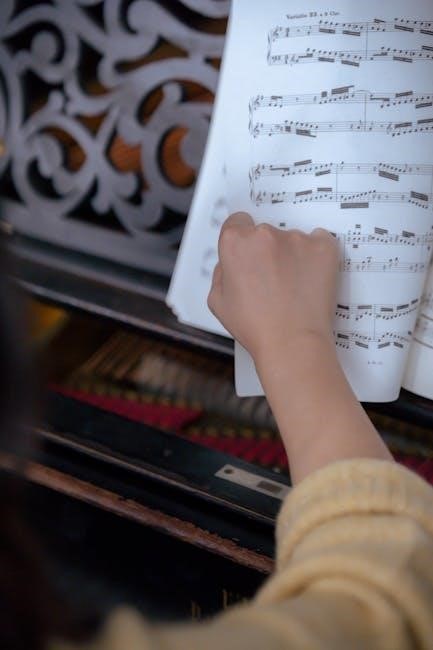
Piano sheet music for “Beauty and the Beast” abounds, offering options for every skill level. Beginner arrangements typically present the melody with simplified left-hand accompaniment, often utilizing basic chords and avoiding complex rhythms. These are ideal for those new to piano or learning the song.
Intermediate piano arrangements introduce more challenging chord progressions, incorporating seventh chords and inversions. They may also feature slightly more elaborate rhythms and dynamics, demanding greater finger dexterity and musicality. These versions often include introductions and interludes mirroring the original song’s structure.
Advanced piano arrangements are truly impressive, showcasing the song’s full harmonic and melodic potential; Expect intricate ornamentation, complex arpeggios, and demanding pedal work. Some arrangements are even transcribed from the original orchestral score, providing a concert-hall experience. Many PDF resources offer varying levels, allowing pianists to progressively challenge themselves. Finding arrangements tailored to specific songs within the soundtrack – “Belle,” “Beauty and the Beast,” “Be Our Guest” – is readily achievable.
IV. Vocal Sheet Music Options (Solo & Duet)
Vocal sheet music for “Beauty and the Beast” caters to both soloists and duets, offering a range of arrangements. Solo versions typically include the melody line with piano accompaniment, often featuring chord symbols for guitar or ukulele players. These are perfect for singers practicing independently or performing with a simple backing.
Duet arrangements, particularly for “Beauty and the Beast,” are incredibly popular, allowing singers to embody Belle and the Beast. These versions divide the vocal lines, creating a beautiful harmonic interplay. Sheet music often includes both melody lines and piano accompaniment, sometimes with simplified harmonies for easier singing.
Many online resources provide vocal scores with lyrics, chord charts, and even suggested vocal ranges. Finding sheet music for specific characters or songs – like Mrs. Potts’ solo or Gaston’s bombastic number – is straightforward. Consider arrangements that include vocal harmonies for a richer sound. PDF formats are widely available, offering convenient access and printing options for vocal practice and performance.
V. Orchestral & Ensemble Arrangements
For larger groups, orchestral and ensemble arrangements of “Beauty and the Beast” offer a grand and immersive experience. These scores typically include parts for strings, woodwinds, brass, and percussion, allowing for a full, cinematic sound. Arrangements range from simplified versions for school orchestras to complex, professional-level scores.
Ensemble arrangements, such as those for chamber orchestras or wind ensembles, provide a more intimate yet still powerful interpretation of the music. These often feature creative instrumentation and arrangements that highlight specific melodic lines or harmonic textures.
PDF sheet music for orchestral and ensemble arrangements can be found on various websites specializing in orchestral scores. These resources often categorize arrangements by instrumentation and difficulty level. While these scores can be more expensive than solo or piano arrangements, the resulting sound is truly spectacular, bringing the magic of the Disney film to life with rich harmonies and dynamic textures.
VI. Finding Free “Beauty and the Beast” Sheet Music (Legality & Resources)
The internet offers numerous sources for free sheet music, but caution is crucial regarding copyright. Downloading copyrighted material without permission is illegal and unethical. Many websites offer arrangements that are either in the public domain, have been explicitly released for free use by the composer, or are user-submitted with questionable legality.
Several websites compile links to free sheet music, but verifying the source and copyright status is essential. IMSLP (International Music Score Library Project) is a reputable resource for public domain scores, though “Beauty and the Beast” arrangements are limited due to its recent copyright.
YouTube tutorials often include sheet music links in the description, but these should also be vetted. Be wary of sites offering complete orchestral scores for free, as these are almost always illegally distributed. Prioritize legal options whenever possible to support composers and publishers, ensuring continued access to quality sheet music.
VII. Paid Sheet Music Resources: Reputable Websites
For high-quality, legally obtained “Beauty and the Beast” sheet music, several reputable websites offer extensive catalogs. Musicnotes.com is a popular choice, providing officially licensed digital sheet music in PDF format, often with adjustable tempos and printing options. SheetMusicPlus is another excellent resource, boasting a vast selection of arrangements for various instruments and skill levels.
Hal Leonard Online is a leading publisher offering official Disney songbooks, including comprehensive collections featuring “Beauty and the Beast.” These often include piano/vocal arrangements, instrumental solos, and even orchestral scores. Amazon also carries a wide range of physical sheet music books from various publishers.
When purchasing, consider the arrangement type (piano, vocal, orchestral), difficulty level, and whether it includes accompaniment tracks. Always check user reviews to gauge the accuracy and quality of the arrangement before committing to a purchase. Supporting these legitimate platforms ensures composers are compensated and encourages the creation of more musical resources.
VIII. Sheet Music Difficulty Levels: Beginner to Advanced
“Beauty and the Beast” sheet music caters to a wide range of skill levels, from beginner pianists to advanced orchestral performers. Beginner arrangements typically simplify melodies and harmonies, often using single-note melodies with basic chord accompaniment. These versions prioritize readability and ease of play, focusing on the core melodic themes.
Intermediate arrangements introduce more complex chords, rhythms, and potentially some ornamentation. They may include more elaborate piano accompaniments and vocal harmonies. Advanced arrangements present the most challenging versions, featuring intricate piano parts, full orchestral scores, and demanding vocal ranges.
When selecting sheet music, honestly assess your current skill level. Starting with a simpler arrangement and gradually progressing to more complex ones is recommended. Look for arrangements specifically labeled for your level, and don’t hesitate to preview samples before purchasing. Consider factors like key signatures, time signatures, and the presence of challenging techniques like arpeggios or trills.
IX. Understanding Sheet Music Notation for “Beauty and the Beast”
Decoding the symbols on “Beauty and the Beast” sheet music is crucial for a successful performance. Familiarize yourself with standard musical notation, including the staff, clef (typically treble for melody and bass for accompaniment), and notes representing pitch and duration. Pay attention to time signatures, which indicate the number of beats per measure and the type of note that receives one beat.
Dynamic markings (p for piano, f for forte, etc.) guide your volume control, while tempo markings (Allegro, Andante) dictate the speed. Articulation marks – staccato, legato, accents – shape the phrasing and expression. Accidentals (sharps, flats, naturals) alter the pitch of notes.
Chord symbols above the staff indicate the harmonies to be played. Understanding these chords, even at a basic level, enhances your musical interpretation. Look for repeat signs, first and second endings, and other navigational symbols to follow the song’s structure accurately.
X. Key Signatures & Time Signatures in Common Arrangements
“Beauty and the Beast” sheet music frequently appears in several keys, impacting the fingering and vocal range. Common keys include C major, G major, and F major for piano arrangements, offering varying levels of difficulty. Vocal arrangements often transpose to suit different voice types.
The key signature, indicated by sharps or flats at the beginning of the staff, tells you which notes are consistently raised or lowered throughout the piece. This simplifies notation and aids sight-reading.
Most arrangements utilize 4/4 time (four beats per measure, quarter note gets one beat), providing a familiar and steady rhythm. However, some versions, particularly those emphasizing waltz-like sections, may employ 3/4 time (three beats per measure). Recognizing these time signatures is vital for maintaining accurate timing and phrasing.
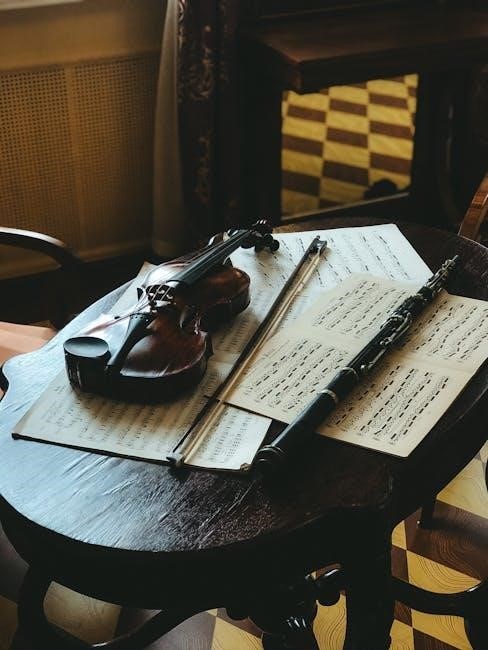
Pay close attention to changes in time signature within a piece, as they can indicate shifts in musical mood or style.
XI. Chord Progressions & Harmonic Analysis
“Beauty and the Beast” employs rich harmonic progressions characteristic of classic Disney songwriting. A foundational progression often revolves around I-vi-IV-V chords in major keys, creating a sense of warmth and familiarity. Expect frequent use of seventh chords (maj7, min7, dom7) to add color and sophistication.
The song skillfully utilizes secondary dominants – chords that temporarily function as the dominant of another chord – to create harmonic interest and build tension. Analyzing these progressions reveals a blend of diatonic harmony (chords within the key) and chromaticism (chords outside the key).
Common chord voicings in piano arrangements often include inversions and passing chords, enhancing the melodic flow. Vocal arrangements frequently simplify the harmony, focusing on root position chords for easier accompaniment. Understanding these harmonic elements allows musicians to improvise, arrange, and interpret the song with greater depth and nuance.
XII. Tips for Learning “Beauty and the Beast” on Piano/Vocals
Mastering “Beauty and the Beast” requires a strategic approach. For piano, begin with the melody line, then gradually add chords, focusing on smooth transitions. Practice slowly with a metronome, building speed incrementally. Pay attention to dynamics – the song’s emotional impact relies heavily on expressive playing.
Vocalists should prioritize breath control and phrasing. The song’s range demands solid technique. Warm up thoroughly before practicing, and focus on clear diction. Listen to multiple recordings to internalize the song’s style and interpretation.
Break down challenging sections into smaller parts. Utilize online resources like tutorials and backing tracks. Don’t hesitate to simplify arrangements initially, then add complexity as your skills improve. Consistent practice and patience are key to successfully learning this beloved Disney classic.
XIII. Copyright Considerations & Fair Use
Understanding copyright is crucial when accessing “Beauty and the Beast” sheet music. Disney holds the copyright to the song and its arrangements. Downloading or distributing copyrighted sheet music without permission is illegal.
Fair use allows limited use of copyrighted material for purposes like education, criticism, or parody. However, simply copying sheet music for personal use generally doesn’t qualify as fair use. Purchasing legally obtained sheet music supports the creators and ensures continued availability.
Beware of unauthorized websites offering “free” sheet music, as these often infringe on copyright. Opt for reputable sources that license music legally. Respecting copyright protects the artistic integrity of the work and encourages further musical creativity. Always verify the legitimacy of any sheet music source before downloading or using it.
XIV. Popular Songs from the Soundtrack & Sheet Music Availability
“Beauty and the Beast” boasts a beloved soundtrack with several songs readily available as sheet music. The titular song, “Beauty and the Beast,” is a staple for vocalists and pianists, found in numerous arrangements from beginner to advanced levels.
Other popular choices include “Belle,” showcasing a bright and optimistic melody, and “Be Our Guest,” a lively ensemble piece often arranged for larger groups. “Gaston” provides a dramatic, villain-centric option, while “Something There” offers a tender duet.
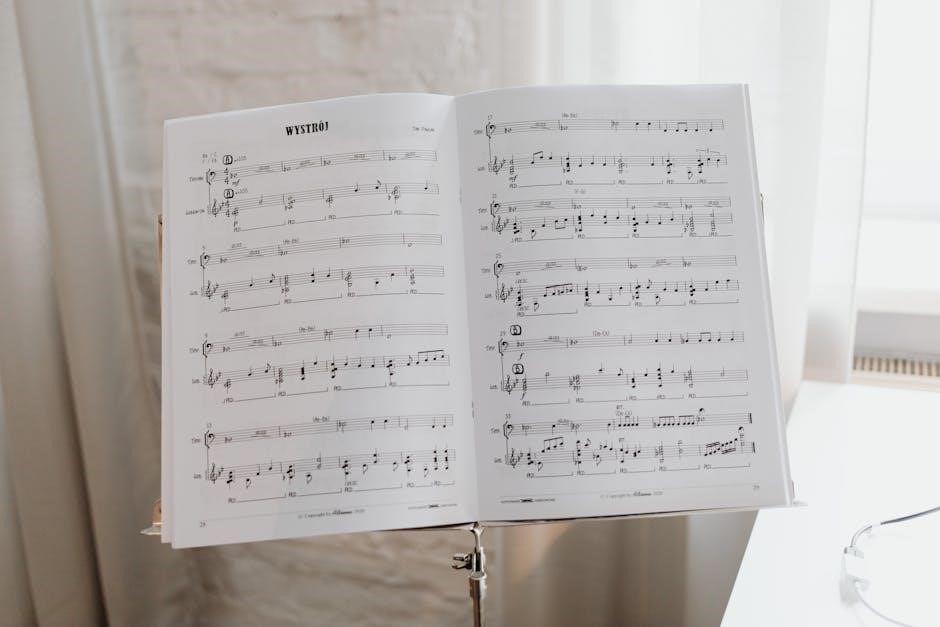
Sheet music for these songs can be found on platforms like Musicnotes, Sheet Music Plus, and Hal Leonard. Availability varies by arrangement (piano, vocal, orchestral) and skill level. Many arrangements include accompaniment tracks for practice. Exploring different versions allows musicians to tailor the music to their abilities and preferences, ensuring a delightful musical experience.
XV. Resources for Accompaniment Tracks & Karaoke Versions
Enhance your “Beauty and the Beast” performance with readily available accompaniment tracks and karaoke versions! These resources are invaluable for vocal practice, instrumental backing, or creating a full ensemble sound without a live orchestra.
Several online platforms offer these resources, including YouTube, Spotify, and dedicated karaoke websites like Karaoke-Version.com. Musicnotes.com and Sheet Music Plus often bundle accompaniment tracks with their sheet music purchases.
For vocalists, karaoke versions provide a chance to sing along with the instrumental track, perfecting timing and phrasing. Instrumental tracks are ideal for instrumentalists wanting to play along with a full arrangement. Consider the quality of the track – look for professionally produced versions for the best sound. Utilizing these resources transforms practice sessions into immersive, enjoyable experiences, bringing the magic of “Beauty and the Beast” to life!