
Sight Reading Piano PDF: A Comprehensive Guide
Sight reading piano practice utilizes readily available PDF resources, offering 354 exercises in C position, alongside classic editions like Augeners Op. 45.
These materials, including “Piano Sightreading” – Joining the Dots, enhance skills through downloadable sheet music and focused exercises.
What is Sight Reading?
Sight reading, fundamentally, is the ability to perform a piece of music accurately, at first glance, without prior practice. For pianists, this translates to interpreting notation directly into sound, a skill crucial for musical fluency.
It’s not about perfection, but about maintaining a steady tempo and accurately rendering the rhythm, pitch, and basic musical indications. Sight reading exercises, often found in PDF format, like those in “Sight Reading ⎼ 354 Reading Exercises in C Position”, are designed to build this skill progressively.
These exercises focus on recognizing patterns, intervals, and chords, enabling musicians to decode the musical language efficiently. Mastering sight reading unlocks a world of musical possibilities, allowing pianists to quickly learn and perform new pieces, and collaborate effectively with others.
Why is Sight Reading Important for Pianists?
Sight reading is paramount for pianists, extending far beyond academic exercises. It’s a cornerstone of musicianship, fostering rapid musical comprehension and performance capabilities. Proficiency allows pianists to quickly learn accompaniments, transpose music, and confidently tackle unfamiliar scores;
Utilizing PDF resources, like Augeners Edition Op. 45, provides focused practice, building essential skills. Strong sight reading enhances a pianist’s ability to participate in ensembles, accompany singers, and even improvise effectively.
Furthermore, it cultivates a deeper understanding of music theory and notation. Regularly engaging with sight reading exercises, readily available in PDF form, strengthens mental agility and musical intuition, ultimately elevating overall piano performance.
Benefits of Using PDF Sight Reading Materials
PDF sight reading materials offer unparalleled convenience and accessibility for pianists. Resources like “Sight Reading ⸺ 354 Reading Exercises” are freely downloadable, eliminating cost barriers to practice. The digital format allows for easy printing, annotation, and portability – practice anywhere!
PDFs facilitate customized learning; adjust print size, highlight challenging sections, or add fingerings directly onto the score. This interactivity enhances comprehension and retention. Furthermore, online resources provide a vast library of materials, catering to all skill levels.
Converting sheet music to PDF allows pianists to create personalized practice sets. The readily available nature of these materials promotes consistent, focused sight reading development, crucial for musical growth.
Popular Sight Reading Resources in PDF Format
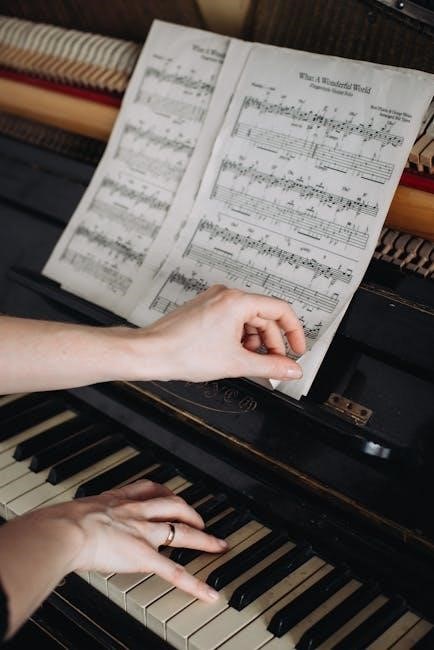
Sight reading piano benefits from diverse PDF options, including the 354 exercises in C position, Augeners Edition Op. 45, and “Piano Sightreading” books.
“Sight Reading ⸺ 354 Reading Exercises in C Position” ⎼ Overview
Sight Reading ⸺ 354 Reading Exercises in C Position is a widely utilized resource, freely accessible in PDF format, specifically designed to bolster sight reading proficiency. This collection provides a structured approach, beginning with fundamental exercises firmly rooted in the C position – a cornerstone for beginner pianists.
The strength of this resource lies in its sheer volume; 354 distinct exercises offer extensive practice opportunities. Each exercise is carefully crafted to progressively challenge the pianist, gradually introducing new rhythmic and melodic elements. This incremental difficulty ensures a steady learning curve, preventing overwhelm and fostering consistent improvement.
The focus on the C position allows learners to concentrate on reading notation without the added complexity of navigating different hand positions. It’s an excellent starting point for developing the crucial skill of associating written symbols with their corresponding keys on the piano. The PDF format allows for easy printing and annotation, making it a practical and versatile tool for piano students and teachers alike.
Augeners Edition Op. 45 Book I ⎼ A Classic Approach
Augeners Edition Op. 45 Book I represents a time-honored method for developing sight reading skills at the piano. This collection, often found as a PDF download, offers a systematic series of exercises designed to build fluency and accuracy in reading music. It’s a staple in many piano curricula due to its proven effectiveness.
Unlike some modern approaches, Augeners focuses on a more traditional, stepwise progression. The exercises begin with simple melodic lines and rhythms, gradually increasing in complexity. This deliberate pacing allows students to internalize fundamental concepts before tackling more challenging material. The book emphasizes clarity and precision, encouraging careful attention to detail.
The PDF availability makes this classic resource accessible to a wider audience. While the presentation may appear somewhat dated, the underlying pedagogical principles remain highly relevant. It’s a valuable supplement to any sight reading practice routine, particularly for those seeking a structured and comprehensive approach.
“Piano Sightreading” ⸺ Joining the Dots Method
“Piano Sightreading” by Alan Bullard, often available as a PDF, employs the “Joining the Dots” method – a unique approach to developing sight reading proficiency. This technique focuses on recognizing melodic shapes and patterns rather than individual notes, fostering quicker comprehension and reducing reliance on note-by-note reading.
The method presents musical fragments as incomplete patterns, requiring the student to “join the dots” by mentally filling in the missing intervals and rhythms. This encourages a holistic view of the music, promoting anticipation and improving rhythmic accuracy. The PDF format allows for convenient printing and annotation.
This book is particularly beneficial for students who struggle with traditional sight reading methods. It’s not simply a collection of exercises; it’s a pedagogical system designed to rewire how the brain processes musical information, leading to more confident and fluid sight reading.
Essential Techniques for Effective Sight Reading
Effective sight reading demands swift key signature recognition, rhythmic precision, and the ability to instantly identify intervals and chords within PDF scores.
Understanding Key Signatures at a Glance
Rapid key signature identification is paramount for fluent sight reading from PDF sheet music. Pianists should instantly recognize sharps or flats, associating them with corresponding scales.
Practice visualizing the circle of fifths to internalize key relationships. Focus on recognizing common signatures – C major (no sharps or flats), G major (one sharp), D major (two sharps), and their relative minors.
Utilize PDF practice materials specifically designed to drill key signature recognition. Quickly naming the key before playing helps build automaticity. Don’t rely on counting; aim for immediate recall. Consistent practice with varied exercises will solidify this crucial skill, improving overall sight reading speed and accuracy.
Rhythm and Time Signature Mastery
Accurate rhythmic interpretation is vital when sight reading piano from PDF scores. Begin by quickly identifying the time signature – is it 4/4, 3/4, or something else? This dictates the beat grouping.
Practice clapping and counting rhythms before playing them on the piano. Focus on understanding note values (whole, half, quarter, eighth) and rests. Utilize PDF resources with rhythmic exercises, starting slowly and gradually increasing tempo.
Pay close attention to tuplets and syncopation. A metronome is invaluable for developing a strong internal pulse. Consistent rhythmic practice, alongside sight reading, builds confidence and prevents errors, leading to more musical performances.
Recognizing Common Intervals and Chords
Efficient sight reading of piano PDF scores hinges on quickly recognizing intervals and chords. Don’t read note-by-note; instead, identify harmonic patterns. Practice identifying intervals (major/minor 2nds, 3rds, 5ths, etc.) both visually on the score and aurally at the piano.
Familiarize yourself with common chord types – major, minor, diminished, augmented – and their inversions. Many sight reading PDF materials focus on harmonic progressions.
Train your eyes to scan for these shapes. This skill allows you to anticipate upcoming notes and chords, improving fluency and reducing hesitation. Consistent practice with PDF exercises will build this crucial recognition ability.

Practical Exercises for Improving Sight Reading Skills
Piano PDF exercises, starting in C position, build foundational skills. Five-finger patterns and progressive difficulty levels are key to enhancing sight reading fluency.
C Position Exercises for Beginners
C position exercises, frequently found in sight reading piano PDF materials, are the cornerstone of initial development. These exercises focus on a limited range of notes – typically C, D, E, F, and G – allowing beginners to concentrate on rhythm and note recognition without the complexity of numerous accidentals or hand position shifts.
Many PDF resources, like “Sight Reading ⸺ 354 Reading Exercises in C Position”, dedicate a significant portion to this foundational stage. The goal isn’t speed, but accuracy and consistent pulse. Beginners should start slowly, focusing on identifying each note and maintaining a steady tempo.
Gradually increasing the tempo, while maintaining accuracy, is crucial. These exercises build muscle memory and establish a strong connection between the visual representation of notes and their corresponding keys on the piano. Consistent practice with these PDF-based exercises will lay a solid foundation for more advanced sight reading.
Five-Finger Exercises and Their Role
Five-finger exercises, often integrated within sight reading piano PDF collections, serve as a vital stepping stone beyond basic C position. These exercises limit hand movement to five consecutive notes, fostering familiarity with scale patterns and improving finger dexterity. They build upon the foundational skills established in C position, preparing students for more complex passages.
PDF resources frequently present these exercises in various keys, encouraging adaptation and reinforcing note recognition across the keyboard; The focus remains on accuracy and evenness of touch, rather than speed.
Regular practice with these exercises enhances the pianist’s ability to quickly identify notes within a limited range, a crucial skill for effective sight reading. They also promote hand independence and coordination, essential for tackling two-handed sight reading challenges found in many PDF scores.
Progressive Difficulty Levels in Sight Reading
Sight reading piano PDF materials are most effective when structured with progressive difficulty levels. Beginners typically start with simple melodies in C position, utilizing only a few notes and basic rhythms. As proficiency grows, PDF collections introduce new key signatures, more complex rhythms, and wider intervals.
Many resources, like those found online, categorize exercises by level – beginner, intermediate, and advanced – allowing pianists to gradually challenge themselves. The introduction of accidentals and different time signatures represents a significant step up in difficulty.
Effective sight reading progression involves consistently tackling pieces slightly beyond one’s current comfort zone. Utilizing PDFs allows for easy access to a vast range of material, facilitating a tailored and effective learning journey. Consistent practice at each level is key to building lasting skills.
Finding and Utilizing Online PDF Resources
Numerous websites offer free sight reading piano PDFs, while paid resources provide curated collections and advanced exercises for focused practice.
Websites Offering Free Sight Reading PDFs
The internet boasts a wealth of websites providing free sight reading piano PDF materials, catering to various skill levels. Many music education sites and online archives host collections of exercises, often categorized by key, rhythm, or difficulty. IMSLP (International Music Score Library Project) is a fantastic resource, offering public domain sheet music, including numerous sight reading examples.
Additionally, dedicated piano learning websites frequently include free PDF downloads as part of their introductory lessons or practice materials. Websites specializing in music theory often provide sight reading drills as supplementary content. A simple web search using keywords like “free piano sight reading PDF” will reveal a multitude of options, though verifying the source’s reliability is always recommended. Remember to explore options offering progressive difficulty levels to ensure continuous improvement.
Paid Resources and Their Advantages
While numerous free sight reading piano PDF resources exist, investing in paid materials often unlocks significant advantages. Commercial collections frequently offer more structured curricula, progressing logically through increasingly complex exercises. These resources often include detailed explanations, pedagogical guidance, and curated selections designed to target specific weaknesses.
Paid PDF books and online courses often boast higher-quality notation, professionally arranged exercises, and supplementary audio tracks for rhythmic accuracy. Furthermore, some platforms provide personalized feedback and progress tracking. Resources like those from established music publishers (e.g., Augeners Edition) ensure accuracy and reliability. The investment can accelerate learning, providing a more focused and efficient path to sight reading mastery compared to solely relying on free, potentially less organized, materials.
Converting Sheet Music to PDF for Practice

A valuable technique for sight reading piano PDF practice involves converting existing sheet music into the PDF format. This allows pianists to utilize a wider range of repertoire beyond dedicated sight reading books. Numerous free online tools and software applications facilitate this conversion process, accepting various input formats like scanned images or MusicXML files.
Converting sheet music enables customization – adjusting the layout, zoom level, and even annotating scores directly on the PDF. This is particularly useful for marking difficult passages or analyzing harmonic structures. Ensure the resulting PDF is clear and legible for optimal practice. Creating a personalized library of sight reading material from existing scores expands practice options and caters to individual musical preferences.
Advanced Sight Reading Techniques
Mastering complex rhythms, simultaneous hand coordination, and navigating unfamiliar notation are crucial for advanced sight reading piano PDF practice and performance.
Reading Complex Rhythms
Successfully navigating complex rhythms during sight reading piano PDF practice demands focused attention and a systematic approach. Begin by identifying the time signature and understanding its implications for beat division. Deconstruct challenging rhythms into smaller, manageable units, clapping or tapping each subdivision to internalize the feel.
Pay close attention to rests, dotted notes, and tuplets, as these frequently introduce rhythmic complexity. Utilize PDF resources that specifically target rhythmic reading, gradually increasing the difficulty level. Practice counting aloud while playing, reinforcing the connection between notation and execution.
Consistent practice with varied rhythmic patterns will build fluency and confidence, enabling you to accurately interpret and perform even the most intricate musical passages found within sight reading piano materials.
Sight Reading with Both Hands Simultaneously
Sight reading piano PDF materials become significantly more challenging when coordinating both hands. Start slowly, prioritizing accuracy over speed. Initially, focus on identifying the key signature and any immediately obvious patterns in each hand independently before attempting to combine them.
Look ahead in the score, anticipating upcoming notes and rhythms in both hands. Utilize PDF resources with clear notation and gradually increase the complexity of the pieces. Practice hands separately until comfortable, then slowly merge them, focusing on maintaining a steady tempo.
Don’t stop if you make a mistake; continue to the end of the phrase or section. Consistent practice with two-handed sight reading builds coordination and fluency, essential for proficient piano performance.
Dealing with Unfamiliar Notation
Encountering unfamiliar notation is inevitable when using sight reading piano PDF resources. Don’t panic! Break down the new symbols or concepts into smaller, manageable parts. Utilize online resources or music theory guides to quickly decipher anything unclear before attempting to play.
Focus on recognizing patterns and relationships between notes, even if the specific notation is new. Look for clues within the musical context – the key signature, time signature, and surrounding notes can provide valuable insights.
Consistent exposure to diverse PDF sheet music will gradually expand your notational vocabulary. Remember, the goal isn’t immediate perfection, but rather to maintain forward momentum and develop a problem-solving approach to unfamiliar musical challenges.

Tools and Apps to Aid Sight Reading Practice
Sight reading piano PDF practice benefits from metronomes, trainer software, and annotation tools; these enhance rhythm, accuracy, and score marking for optimal learning.
Metronomes and Their Importance
Metronomes are absolutely crucial tools when practicing sight reading piano PDF exercises. Maintaining a steady tempo is paramount for accurately interpreting rhythms and developing a strong internal pulse. When initially working through new pieces from PDF sources, a metronome prevents rushing or slowing down, fostering consistent performance.
Beginners often struggle with rhythmic accuracy, and a metronome provides immediate feedback, highlighting areas needing improvement. Gradually increase the tempo as proficiency grows, challenging yourself to maintain precision at faster speeds. Digital metronomes offer versatility, allowing for customizable time signatures and subdivisions.
Utilizing a metronome isn’t about robotic precision, but about building a solid rhythmic foundation. It allows you to internalize the beat, ultimately leading to more expressive and confident sight reading from any piano PDF.
Sight Reading Trainer Software
Sight Reading Trainer software offers a dynamic alternative to traditional piano PDF practice. These programs present musical excerpts on-screen, simulating a real-time sight reading experience. Many applications adapt to your skill level, progressively increasing difficulty and focusing on areas needing improvement.
Unlike static PDFs, software often provides immediate feedback on accuracy, highlighting incorrect notes or rhythms. Some programs even record your performance, allowing for self-assessment. Features like adjustable tempo and customizable key signatures enhance the learning process.
While piano PDFs remain valuable, software adds an interactive element, making practice more engaging and efficient. It’s a particularly useful tool for identifying rhythmic weaknesses and building confidence in recognizing musical patterns, complementing your sight reading journey.
PDF Annotation Tools for Marking Scores
When utilizing sight reading piano PDFs, annotation tools become invaluable for focused practice. Software like Adobe Acrobat Reader, or dedicated PDF editors, allow you to directly mark scores digitally. This includes highlighting tricky rhythms, circling unfamiliar key signatures, or adding fingerings.
These annotations transform a static PDF into a personalized learning resource. You can color-code sections based on difficulty, or jot down reminders about specific techniques. Digital markings are non-destructive; the original PDF remains unchanged, and annotations can be easily toggled on or off.
Effectively marking sight reading material enhances comprehension and retention. It’s a proactive approach, forcing you to analyze the music before playing, ultimately improving your speed and accuracy when sight reading from PDFs.